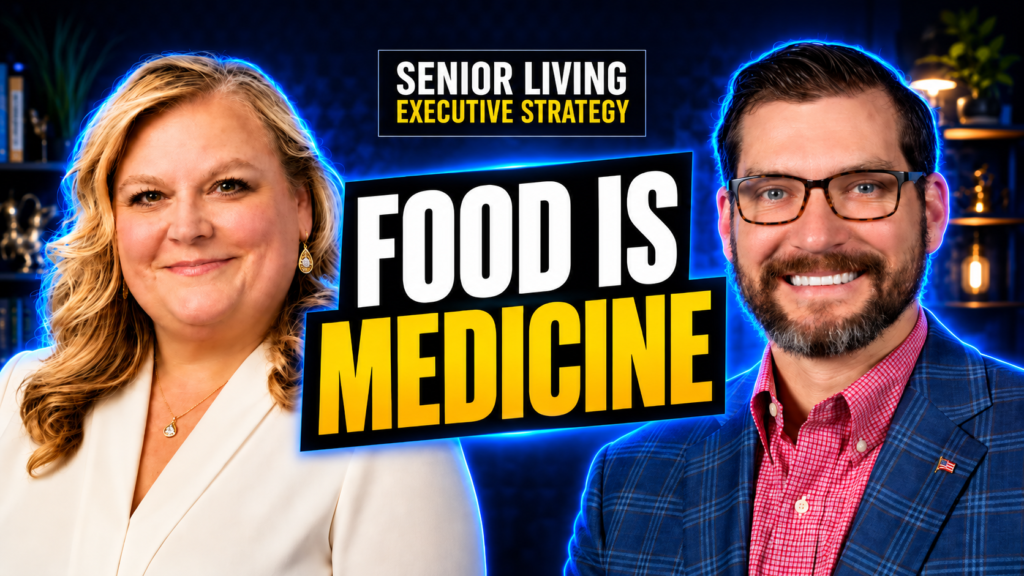
Walk through most assisted living markets and the communities start to blur together. Many are older buildings making similar care promises, and usually one provider already owns the reputation for the best care in town. So how does a new operator, or one taking over a building, give families a reason to choose them? In Part 2 of our Senior Living Executive Strategy conversation with Matt Henney of Metz Culinary Management, Gravity COO Melissa Brown argues that the assisted living dining program is the place to start.
Why assisted living communities struggle to stand out
Strong occupancy doesn’t make differentiation optional. Assisted living occupancy reached 89.1% in the third quarter of 2026, up from 88.3% the quarter before, according to NIC MAP data. Independent living sits at 91.7%, so assisted living still trails it by 2.6 points.
Supply is barely moving. Inventory grew just 0.4% year over year, with 16,159 units in development across NIC’s 31 primary markets. Most assisted living communities are competing against the same buildings they faced last year. When construction picks back up, new buildings will compete on finishes and amenities that older properties can’t easily match.
Families are also paying more. The national median for assisted living reached $6,200 a month in 2025, or $74,400 a year, up 5% according to the CareScout Cost of Care Survey. At that price, families expect to see what they’re paying for on the first tour.
For operators, the pressure tends to show up as:
- Tours that look like every other tour in the market
- Rate increases with nothing new for families to see
- Acquired buildings carrying a reputation the new owner has to overcome
- A care reputation that’s hard to win, because one competitor usually owns it already
The adult child is part of the sale
Assisted living is rarely a one-person decision. In 2014 figures from the American Seniors Housing Association, adult children took part in 73% of senior housing decisions. Caring.com’s referral data suggested the move-in rate was three times higher when an adult child made the first inquiry.
Those adult children often bring guilt into the decision. In Genworth’s 2021 Beyond Dollars study, 35% of families who moved a loved one into assisted living reported guilt tied to limits on how much they could help, compared with 22% of families providing care at home.
Melissa sees dining speak directly to that guilt. When she tells colleagues who recently placed a parent about the dining plans for her assisted living projects, she says the reaction is the same every time: “I’d want to live there.” A family that believes their parent will eat better than they do at home has one less reason to second-guess the move.
Matt described the same thing from the family side. When his grandparents moved into senior care, his family wanted to know the building didn’t smell and that the food and activities were good. Those are the first things an adult child checks, and they’re the things a tour can prove.
Dining is what families notice, and what they doubt
Prospects come in expecting little from the food, and that’s why dining can set a community apart. In a 2024 survey of 1,485 adults ages 55 to 96, only 17% were very confident senior living communities could deliver the dining variety they expect. When asked which words they associate with senior living, just 11% chose restaurant-quality food, which put it last on the list.
That gap is the opportunity. When expectations are that low, fresh-baked bread and scratch-made entrées give families something they didn’t expect, and something they’ll tell their friends about.
Matt pointed out that operators have heard for years that food and activities matter most, yet few invest on the food side. He argues that dining belongs in the marketing program and can help drive revenue, instead of being treated only as a departmental cost.
What a better assisted living dining program actually costs
Measured against the rate, better food costs less than most budgets assume. There’s little public food-cost data for assisted living, but nursing homes offer a reference point. An NJ Advance Media analysis of more than 10,000 CMS cost reports found that half of nursing homes spend less than $12.03 per resident per day on food, and more than a quarter spend under $10. Against the $204 median daily rate for assisted living, a food budget in that range comes to about 6% of the rate.
The table shows what it would cost to add to that budget. The example is an 80-unit community at the national assisted living average of 89.1% occupancy, which works out to about 71 residents and 9 empty units.
| Added food spend per resident day | Cost per resident per year | Share of the $204 median daily rate | Cost for 71 residents per year |
|---|---|---|---|
| $1 | $365 | 0.5% | $25,915 |
| $2 | $730 | 1.0% | $51,830 |
| $3 | $1,095 | 1.5% | $77,745 |
| $5 | $1,825 | 2.5% | $129,575 |
At the national median, each empty unit is about $74,400 a year in potential revenue. Adding $2 a day for every resident in the building costs less than one of those nine units would bring in once it’s filled. That’s revenue, not margin, but it puts the decision in proportion.
Melissa described her own budget the same way: somewhat more than a typical assisted living food budget, but not a ton more. European grains and flours sound like an expensive import, but she finds them at the regular grocery store for a little more than the domestic versions.
The bigger cost is labor. Baking from scratch takes more staff time than par-baking goods made elsewhere, and Matt acknowledged that tradeoff. Metz aims to make 85–90% of its menu from scratch, because getting rid of preservatives entirely isn’t realistic with today’s supply chain.
Neither Melissa nor Matt treats better dining as all or nothing. Practical starting points include:
- Baking one item from scratch every day, such as bread or morning pastries, so the building smells like a kitchen at tour time
- Switching to higher-quality pastas, grains and flours for the dishes residents order most
- Raising one meal period at a time to an independent living standard
- Setting a scratch-cooking target and tracking progress toward it
Put dining into the sales process
A strong kitchen does little for census if the sales team never shows it. Matt’s advice is direct: every sales or marketing director in assisted living should be working with their food service team, with menus in hand and meals in front of families.
Ways to build that into the process:
- Schedule tours around a meal or a tasting, not between them
- Give prospects and their adult children the current week’s menu
- Invite the adult child to a meal after move-in, not just before
- Record dining mentions in inquiry notes and lost-lead reasons, so you can see whether food is winning or losing move-ins
- Ask about dining in move-out interviews and resident satisfaction surveys
Melissa applies the same thinking beyond the kitchen. Her assisted living projects include indoor pickleball courts, because there’s no reason that kind of amenity should belong only to independent living, and adult children who play can join in. The goal is to bring what the best independent living communities offer into assisted living, at a level that fits the setting.
Let technology carry the kitchen paperwork
Food service has run on clipboards for a long time, and survey results show what that costs. In skilled nursing, F812 (food procurement, storage, preparation and sanitation) was the third most cited federal deficiency in 2025, behind only infection control and accident hazards, according to PharMerica’s review of CMS QCOR data. Provider Magazine reports that improper temperature tracking and dishwashing sanitation failures regularly trip up nursing home teams. Assisted living kitchens answer to state rules rather than F812, but temperature logs and sanitation records are a weak spot in both settings.
Waste is the other hidden cost. A RecyclingWorks study found that the average assisted living community in Massachusetts generates about 286 pounds of food waste a day.
Matt described a newer group of tools built to take that burden off the team:
- Ambient temperature monitoring that records cooler and food temperatures automatically
- Voice-driven inventory, where staff count stock by speaking instead of writing it down
- Invoice scanning that compares what’s on the shelf with census and diet orders, and flags a shortage before the meal
The last one matters most to executive directors who aren’t food service experts. A system that warns them there are 100 residents, 80 on regular diets and only enough chicken for 60 gives them visibility a binder never will.
Melissa and Matt drew the same line on AI: the program comes first, and the technology supports it. The test for any new tool is whether it takes work off the team, not whether it adds AI to the kitchen.
How Gravity helps
Gravity works with assisted living and skilled nursing operators on the decisions behind a dining program, not just the menu.
- Dining program and vendor evaluation. We review your current food service program or contract against what leadership cares about: census, retention, resident satisfaction and cost per resident day.
- Connecting dining to sales. We help line up the sales process with the kitchen, from how tours are built to tracking whether dining is winning or losing move-ins.
- Repositioning acquired or underperforming buildings. For owners, investors and developers, we help define what will set a community apart in its market and build the operating plan to deliver it.
- Food safety and survey readiness. For skilled nursing operators, mock surveys and compliance reviews catch F812 issues like temperature logging before a surveyor does.
We’re putting the same thinking into practice in Gravity’s assisted living projects, including the European pantry menu Melissa and Matt discuss in this episode.
If your community is having a hard time standing out, or your dining program isn’t pulling its weight for census and retention, start the conversation or call 844-899-6883.
Frequently asked questions
What makes an assisted living community stand out from competitors?
In most markets, the buildings and care promises look alike, and one provider often owns the reputation for the best care. Dining is one of the few differences families can see, smell and taste on a tour. A noticeably better assisted living dining program gives both the resident and the adult child a concrete reason to choose one community over another.
How much does it cost to improve an assisted living dining program?
Less than most budgets assume. At the 2025 national median assisted living rate of $204 a day, adding $2 per resident day to the food budget equals about 1% of the daily rate. For an 80-unit community at average occupancy, that’s about $52,000 a year, less than the roughly $74,400 a year one more occupied unit would bring in.
Do adult children influence the choice of an assisted living community?
Yes. In 2014 figures from the American Seniors Housing Association, adult children took part in 73% of senior housing decisions. Many also feel guilty about the move, so anything that reassures them about their parent’s daily life, including the food, carries real weight.
Is scratch cooking realistic in assisted living?
Yes, for most of the menu. Metz Culinary Management targets 85–90% scratch cooking, because fully preservative-free food isn’t realistic with today’s supply chain. Communities can start with one scratch-made item a day, such as bread, and expand as the budget allows.
What is a European pantry menu?
It’s a menu Gravity and Metz Culinary Management are building for Gravity’s assisted living projects. It uses European grains, flours and pastas, combined with Metz’s standards for proteins and vegetables, and adds baked goods made from scratch in the community.
How can technology help an assisted living kitchen?
Newer food service tools automate temperature logging, let staff count inventory by voice and compare invoices against census and diet orders. That cuts paperwork and food safety risk, and gives executive directors who aren’t food service experts a clear view of inventory and budget.
Start with Part 1
This episode continues Melissa and Matt’s conversation. In Part 1, Food as Medicine in Assisted Living: The Business Case for Better Dining on a Real Budget, they talk about treating food as part of the care plan when the budget is tight.